

The Helms Polyfoam Approach:
Revolutionizing the realm of soil stabilization, Helms Polyfoam’s deep injection process stands out for its efficiency and minimal invasiveness. Unlike traditional methods that often involve extensive excavation and the use of substantial materials, Helms Polyfoam’s approach is strategically designed to minimize disruption and maximize effectiveness.
Precision Drilling Excellence:
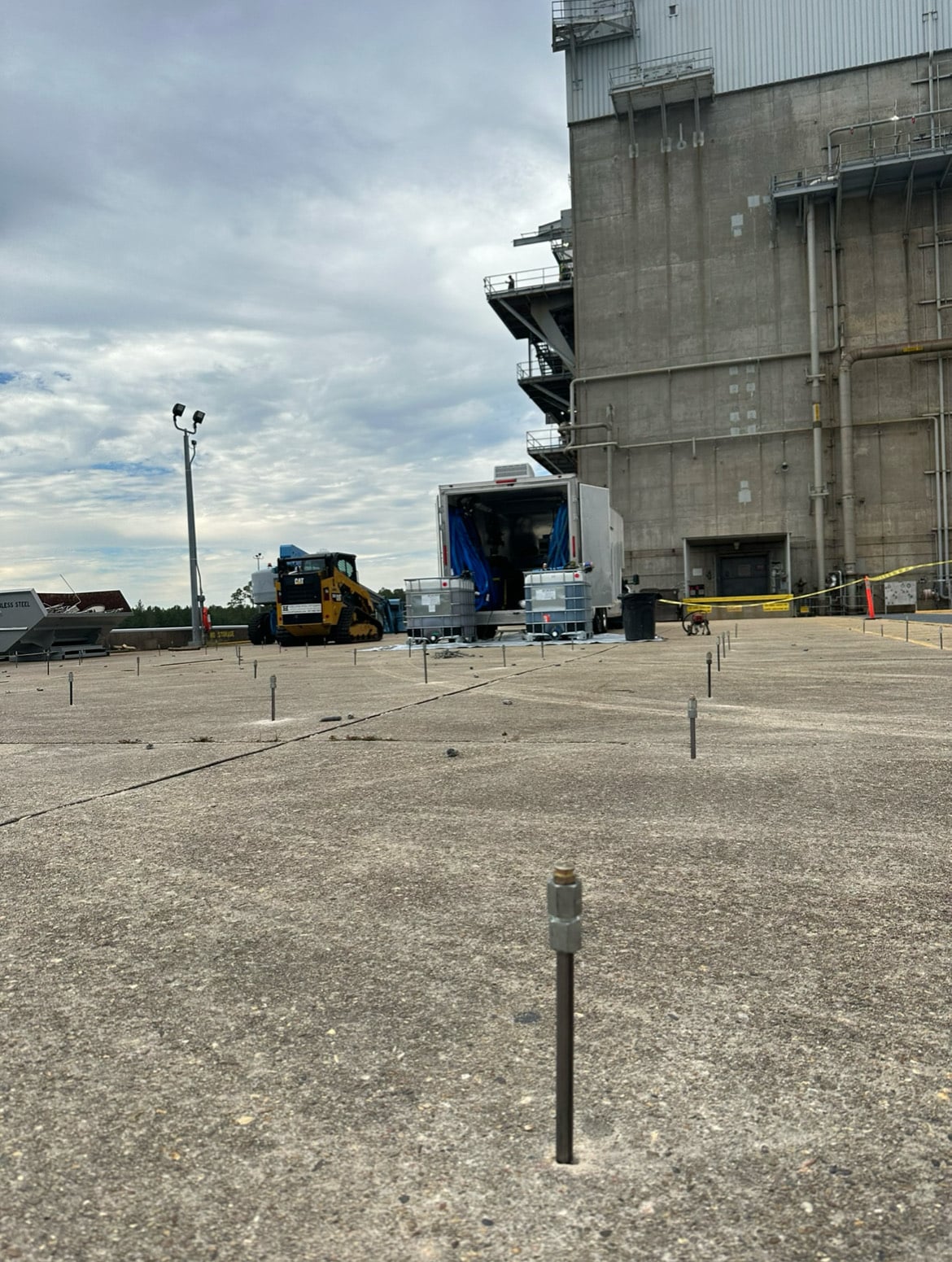
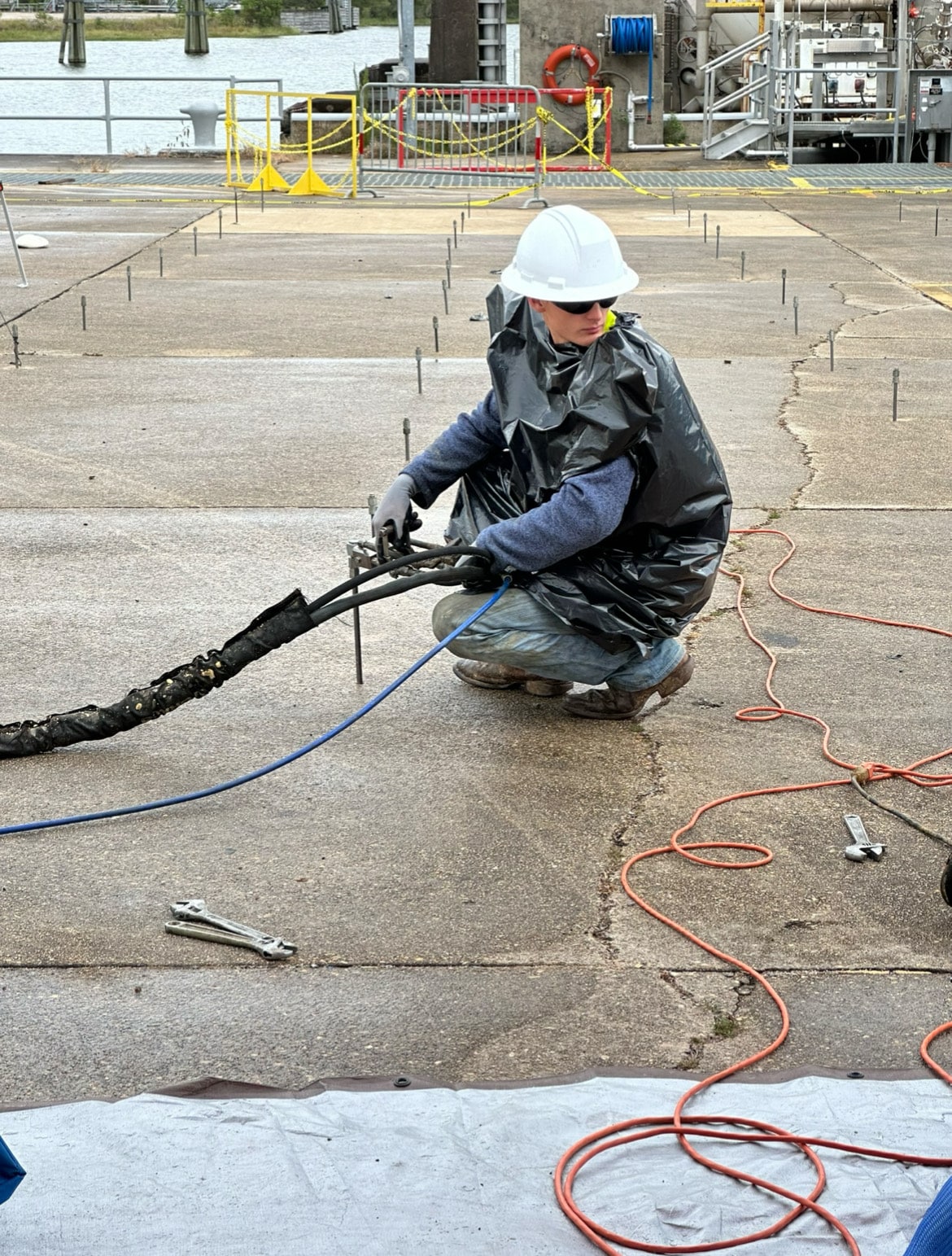
The process begins with Helms Polyfoam’s team of experts employing precision drilling to establish strategic injection points across the tarmac. This meticulous approach minimizes disruptions while ensuring the overall stability of the surface.
Polyurethane Injection Magic:
The heart of the solution lies in the injection of a specially formulated polyurethane foam. This high-density foam boasts remarkable expansion properties, permeating even the smallest crevices and voids beneath the tarmac.
Expanding Resins for Robust Stability:
Upon injection, the polyurethane foam expands, filling voids, and compacting loose soil. This not only stabilizes the immediate area but also creates a resilient foundation capable of withstanding heavy loads and environmental stressors. Helms Polyfoam’s expanding resins can increase load bearing by an impressive 500% with a compressive strength ranging from 10,000 psf to an astounding 100,000 psf in confined spaces.
Key Benefits:
Minimized Downtime:
Helms Polyfoam’s deep injection process significantly reduces downtime compared to traditional stabilization methods. This allows NASA to promptly resume testing without compromising the stability of the facility.
Environmental Friendliness:
Unlike conventional approaches that often necessitate extensive excavation, Helms Polyfoam’s process is environmentally friendly, minimizing the overall carbon footprint of the project.
Long-Term Durability:
The specially formulated polyurethane foam used in the deep injection process is engineered to withstand the test of time. Its durability ensures that the stabilized tarmac remains structurally sound for years to come, with some chemists estimating the polyurethane resin’s longevity at 100 years or more.